Monday, January 7, 2013

Gifts

An example of the gifts in our congregation: Kissing Hands Mittens knitted for Sandy Hook by one of our Handmade Ministry members.


Here are the thoughts I'm having in preparation for my sermon for 1/20/13 on 1Corinthians 12: 1-11. Feel free to comment.
Now there are varieties of gifts, but the same Spirit; and there are varieties of services, but the same Lord; and there are varieties of activities, but it is the same God who activates all of them in everyone. To each is given the manifestation of the Spirit for the common good.

Our congregation just had our annual “Star Gifts” distribution. (If you don’t know about this fun tradition, read about it here.)

Our congregation, like many Christian congregations, is filled with gifted folks. In fact, I don’t think I’m wrong when I say that the gifts within our congregation are extraordinary both in number and in quality.

Alas, like every other congregation, our congregation is filled with sinners—not terrible criminal types, mind you, but garden-variety sinners—short-tempered folks, impulsive folks, spendthrifts, misers, gossips, nit-pickers, messy people and neat-freaks, and the like. In short, our church is filled with human beings, people who are not perfect, but are mostly good most of the time.

In spite of their flaws, (or maybe even because of them, for all I know), as individuals, our folks do a lot of good in the community. Collectively, alas, our congregation can sometimes be less than the sum of its parts.

The Church of the Savior, a somewhat famous mission-oriented church in Washington DC, requires each of its members to re-commit (or to choose not to re-commit) to the congregation each year. This idea terrifies most congregations. We tend to think of a worst-case scenario—like, what if the church is going through a rough time, and a group of people quits en masse? But the truth is, that can happen anyway, regardless of whether or not the congregation has a formal, annual process of membership renewal.

And another truth is that a crisis, whether large or small, is always either just beginning, just ending, or looming in every congregation.
The Chinese word for crisis is the word for danger merged with the word for opportunity.  This is a fact that has fascinated me for a long time. So much so that I once asked a native Chinese speaker to draw this for me. (I used to keep it taped over my desk but it got misplaced in a move.) Individuals, as well as groups (including churches) sometimes do emerge from crisis situations stronger, wiser and better than ever before, but usually not without some pain in the process.

I believe that being part of the Church means being in ministry, whether you are a pastor or a lay person. We are called to different ministries in our lifetime. Just as pastors are called to a church and then called away, sometimes lay people are called to join or leave a congregation as well. Making it an annual event just acknowledges that fact.

I have no authority to change the bylaws of my congregation regarding membership, and I don’t think I am going to try. But I am going to preach about this idea. And whether you are a member of my church or another church, I think it is a good idea to ask yourself, perhaps annually, or maybe just when the going gets tough, “Where is God in this situation?  What is God calling me to do?” And then just listen. God will tell you what to do. 

I have been in that situation in the past, in churches and in other situations. Sometimes God leads you away from a difficult situation. Other times, God calls on you to change.

A little over a year ago, I realized that God was calling me to change. In my desire to be more kind and loving I had turned into kind of a doormat. At first I tried to change the people who were wiping their feet on me. Then I realized I was the only person I could really change, and so I asked God to help me change. And God told me to stand up and defend my piece of ground, and to call out oppression and bullying and bad behavior when I see it. 

And so if you are reading this and you know me personally and you have been thinking that I have changed and I am suddenly kind of a pain in the neck, no, you aren't imagining things. I don't believe that I have created a single crisis through my changed behavior, but I do believe that by pointing out this or that crisis and saying "we have to do something about it," (or in some cases, to be honest,  "are you going to do something about this?) I have put some noses out of joint, at least for a while. 

It hasn't always been easy. At any given time now more people are angry at me than I ever remember happening at any other time in my life. But some of them have started to get over it. And when they get over it, those relationships vastly improve. My life is slowly and steadily getting better than ever. I feel more myself, and also more the person I feel God is calling me to be. I feel like I'm becoming a better person--a better pastor, a better boss, a better mom and wife and friend and sister and cousin and even, at nearly fifty, a better daughter, which should show you that it is never too late to make changes in your life and your self.

God wants to manifest gifts through you in the most effective way possible. The vehicle that God has given us for this is churches, which are human institutions, and therefore, like the humans who make them up, sinful and imperfect. By its very nature, the human experience is the experience of God's perfect love clothed in imperfect vessels. Under other circumstances, a person that has thoughtlessly hurt your feelings on many occasions might be quite willing to die for you. And, admit it, you might be very willing to die for a lot of people who mostly kind of annoy you, should circumstances demand such a sacrifice. That's God's perfect love at work in us.  

We may not be perfect, but we can be awesome. And our churches can be awesome. God is willing. Are we willing?

Saturday, January 5, 2013

Got Baptism?


 John answered all of them by saying, "I baptize you with water; but one who is more powerful than I is coming; I am not worthy to untie the thong of his sandals. He will baptize you with the Holy Spirit and fire.  His winnowing fork is in his hand, to clear his threshing floor and to gather the wheat into his granary; but the chaff he will burn with unquenchable fire." 

I'm working on a sermon on the problem of evil. It's not my first and it won't be my last.

In seminary I was taught to run, far and fast, from anyone who said they had figured out the problem of evil, and never look back. I still think that is excellent advice.

Religion is supposed to help people wrestle with evil. It doesn't solve the problem of evil, and as for religions that claim to, see above. The irony of this, acknowledged in the Bible (and, I assume, in other classical religious texts) is this: that which we seek to destroy we often become.

I learned about this paradox in seminary as well, from a wise man named William D "Chip" Aldridge Jr. : "If you cut off the dragon's head, another one grows in its place," Chip said to me, one day, when we were talking about the evils of bureaucracy.  "If you slay the dragon, you become him."

Yeah, I know it's not from the Bible, but it was a revelation to me at the time and it rings even more true to me now. Evil is tough to overcome, because it is like a black hole that leads to more evil.

I've been thinking a lot about the problem of evil lately, in the wake of the terrible shootings at Sandy Hook elementary. 

This horrifying event brought so much good to the fore, beginning with the teachers and administrators who sought to stop the shooter, and then the first responders, the local, state and national officials, and thousands of untold others who prayed, sent cards and gifts and organized and attended candlelight vigils. 

All of that vast immensity of goodness can never erase those minutes when evil held sway at Sandy Hook. This is why evil is such a terrible problem. A few minutes of evil can wreak havoc on countless lifetimes of goodness.

There are many aphorisms about good and evil, and for good reason. Evil has a glamorous  appeal. It is simultaneously attractive and repulsive. It is seductive. We all succumb to the allure of evil to some degree or other, whether the temptation is a small one, such as a minor social slight, or more serious, such as participating in a criminal act.

Evil is a shapeshifter, a con artist that often clothes itself in the wardrobe of righteousness. Another paradox about evil is that if a particular opinion or act makes you feel self-righteous there is a greater than average likelihood that it is to some extent evil. More than one mass killer felt particularly virtuous in performing the act. We may never know if the Sandy Hook killer fell into that category, but it would not surprise me.

The problem of evil is fascinating and frustrating, sort of like evil itself. And it is also the reason why I am a Christian.

I'm not a Christian because I believe that the words of the Bible should be taken literally, or that scripture is inerrant. In fact, I'm not even sure what it would take for the Bible to be inerrant.  The very idea strikes me as facile nonsense, easily dismissed out of hand. 

I'm not a Christian because I think the pope is always right. The pope is a person. People make mistakes. And anyway I'm not Catholic. My family moved away from the Catholic church when my Great-Great-Grandmother got disowned for marrying a Protestant. Yes, I think that was evil, but I don't believe my relatives were completely evil because they made a mistake. And I don't think that religion is the root of all evil. Religion is an ideology, and rigid, doctrinaire thinking about any ideology leads to evil.  Religion isn't special that way. Yeah, it purports to be about ultimate reality, which means that the evil that comes out of religion can be extra-evil but  it also means the good that comes out of religion can be extra good. (Exhibit A: the Civil Rights movement in the U.S. You may think that didn't come out of religion, but if that's what you think, you're just factually incorrect.)

I'm not a Christian because I believe that Churches or Christians are perfect. The church is a human institution. Christians are humans. Humans aren't perfect, and the institutions we manage are not perfect. And by the way I don't like the bumper sticker that says, "Christians aren't perfect, just forgiven." Forgiveness is for everyone. Christians should be too busy figuring out who they should forgive and who they should ask for forgiveness to have time bragging about the forgiveness they have received.

 I'm not a Christian because I hate science and logic. In fact, I love science and logic. Neither are perfect but life is better with them than without them.

I'm not a Christian because I believe that if I'm not I will be tortured for eternity if I don't believe a set of doctrines. I wouldn't even know how to make myself believe things that go against my own logic. Maybe there is a hell, and maybe I deserve to go there because I don't follow the right brand of religion. One thing is for sure: I am going to find out, because I am going to die, as are we all. However, I'm concerned about life on earth and give much more thought to this life than life eternal. I think trying to be good is its own reward, and doing evil is something to be avoided because doing evil puts more evil in the world, and the evil in the world leads to terrible deeds, like war and murder.

I'm not a Christian because I doubt the basic goodness of most people. Most people are basically good most of the time. I believe this basic goodness is not just a by-product of society, it is the only product of society that really matters.

I'm not a Christian because I've studied every religion carefully and decided that Christianity is the only, or even necessarily the best, way. I do know that it feels like the best way for me. And I firmly believe that an endless search for truth that involves no commitment is one of the temptations that evil offers. This is one of the tricky aspects of evil--a search for truth is good, but an ongoing rejection of the good in favor of a fruitless questing after the perfect is evil because it is a road to nowhere. (Don't get me wrong: the inquiry itself is not evil, but seeking after perfection and rejecting everything less eventually leads to misery. Seek perfection, and don't settle for less, but know that sometimes perfection clothes itself in imperfection. Yeah, I know: another paradox. True faith, faith worth having, is loaded with 'em.)

I am a Christian because Christianity has stood the test of time. I'm not talking about a particular "way" of being a Christian, such as Presbyterianism, or the contemplative tradition, or whatever. Wisdom and goodness and truth have come from Christianity for 2000 years. Yeah, stupidity and evil and lies have come from Christianity as well, but again, the perfect is the enemy of the good. 

I am a Christian because when I think about my Baptism, I am thankful. It is true that I was a young child when I received my Baptism, and when I consented to be Baptized I didn't really fully understand what I was saying (do any of us ever fully understand anything?) but when I think about all the good things that have flowed from that day, love and friendship and moral education and peace and comfort and joy, I'm so so thankful. 

I know that some of you have had a different experience of religion. Here's the thing: so have I. I've been a victim of narrow-mindedness and stupidity and mendacity committed in the name of religion. The world is an evil place. But I believe that a light shines into all this darkness, and the darkness has not yet overcome it. And for me, Christianity is at least a part of that light. And so I embrace that light, and seek to walk in it for the remainder of my days. This commitment has been a blessing to me.

And so, at the start of a new year, and in the face of evil that sometimes takes an unspeakable form, I offer: Baptism.

I don't do a lot of Baptisms. I think I did one last year. I do even fewer Baptisms than marriages, because right now in our culture, we believe more in marriage than in Baptism, and that is saying something, because as a culture we don't believe very much in marriage.

But I believe in Baptism. And so I am making an offer: I will Baptize you. No matter who you are or where you are on life's journey. If you have already been Baptized, I can't re-Baptize you (because Baptism is supposed to be a once-in-a-lifetime thing), but I can offer you an affirmation of Baptism, in which you repeat the actions of your Baptism and give thanks for it. 

I will Baptize you (or affirm your Baptism) in any way you like: with a sprinkling of a few drops of water on your forehead, by immersing you in a river, lake or pool, in the church or outside of it, in a public space or private, while you are clad in a white gown or a pair of blue jeans and a t-shirt, at any hour of the day or night, whether you are free or in rehab or a halfway house or even if you are in jail. I will Baptize you.  I can Baptize you in an all-night diner with the water from the water glass. I can Baptize you with the remains of a puddle in your driveway. All that I need is: me, you, some water and the Holy Spirit. If you bring yourself, and I bring me, and we find some water, the Holy Spirit will be there.  

I once offered to Baptize a (mostly secular, Jewish) friend with the water from the flower vase on a table at a Borders Books and Music in Towson, Maryland. We were talking about Baptism.

"Could you Baptize me right now?" He joked.

"Sure," I said, in a lighthearted way but not exactly joking. "We can use the water from the flowers. Do you acknowledge Jesus Christ as your Lord and Savior and renounce the powers of evil?"

"How about one out of two?" He joked.

I didn't end up doing a Baptism that day, and of course, we are still friends. But if he had answered yes to both questions, it could have gone the other way. I would have Baptized him then and there, if he had truly wanted it, if he wasn't really joking but just saying something serious in a kidding way, the way sometimes people do.

If you are a rational person, a person who calls yourself an agnostic or an Atheist, you probably don't believe in the Holy Spirit.

Do you believe in love?

Do you believe in goodness?

Do you believe that people can change?

Then you believe in the Holy Spirit. You may not call it that and you may be extremely upset at the idea that I am projecting my own religion onto your anti-religion. Or maybe this inspires you, somehow. Whatever. All you need to know right now is that if you ever decide you want it, I will Baptize you, the way John the Baptist Baptized people thousands of years ago except unlike John I live in a house and I don't eat locusts. (I do eat wild honey. It tastes good. Try it in your tea, or on toast with peanut butter or almond butter.)

I want to do some Baptisms. It may not seem like much, but it is what I can do and I want to do it.

Are you in?

I know, maybe it is the "Lord and Savior" bit that you don't get. What does that mean, anyway?

It means different things to different people. If you are curious about how rational people who believe in science and logic think about it, I would encourage you to check out Meeting Jesus Again for the First Time by Marcus Borg. (And yes, it is available on Kindle, and you can get the Kindle App for free on your computer so if you are reading this you can most likely be reading this book within a minute.)

I always say I was Baptized because my mom wanted the best for me, and to her, the Christian faith was a gateway to the very best that this world has to offer. And Mom was right. Through the church I was exposed to music, art, the niceties of polite society, and most of all the idea that my life mattered, and what I did and didn't do with it mattered.

Maybe you think that Christianity is a religion for poor people, or for people who are down and out and desperate, people who tend to extremes like addiction, people who are not the brightest or most educated, and the answer is: Yes. Christianity has something to offer everyone, including the folks that other folks despise and reject, as well as the most popular and successful folks, (because though it is a hoary cliche, worldly success and popularity aren't everything.)

So I'm asking you, in a lighthearted but completely serious way: Got Baptism?

Because if you don't, I want to help you change that.

Sunday, December 30, 2012

Happy New Year!


It is normal at the end of a year in which you have experienced hardship to experience the end of one year and the beginning of the next year with some relief. We all like the idea that we can put grief and pain behind us and move on, but it isn't really true. Our experiences, whether good, bad, or neutral, remain with us and will continue to shape us for the remainder of our lives, for good or for ill.  Nevertheless, the changing from one year to the next is a good time to take stock and even make changes.
I tend not to make major New Year's resolutions because most people break their resolutions as soon as they make them. But there are other great ways to renew one's life besides resolutions. The early Christians believed the first day of the new year should be spent reflecting on past mistakes and resolving to improve oneself in the new year.

At care2.com they suggest committing seven days to starting over.  This could be a great way to shake things up for the first day of the year.

At wikihow, the suggestions are more along the lines of shaking things up in one or more areas of your life.  If you are shy, try being more outgoing, or if you are extroverted, try adding in more contemplation. 

Mentalhealth.com suggests living with more attention to the little things that mean a lot, such as walking, eating and breathing.

Ehow.com suggests making practical changes, such as getting more sleep or spending more time outdoors.

Brainyquotes.com offers quotes featuring the word "renew," such as this one by Anais Nin: It is the function of art to renew our perception. What we are familiar with we cease to see. The writer shakes up the familiar scene, and, as if by magic, we see a new meaning in it. 

The New Year, like so much in life, is to at least some extent what you make of it. I hope 2013 is a good one for you!


Friday, December 14, 2012

Gifts of the Magi

Where is the child who has been born king of the Jews? For we observed his star at its rising, and have come to pay him homage. (excerpt from Matthew 2:1-12)

Epiphany, the last Sunday in the Advent-Christmas season, is my favorite day in the Christmas season. As a child I don't remember having a separate observance of Epiphany at church. Perhaps the pastor gave a sermon about the story of Magi on the Sunday closest to January 6; I don't really remember.

I came to love the idea of Epiphany in college, when I learned that "epiphany" is a word that means "a sudden realization of a great truth."

How often has that happened to you? It has happened to me a lot--suddenly a lot of facts and feelings come together in my brain and I understand my world and my life in a new way. An epiphany can be frightening or inspiring, but it changes everything forever. 

I see Epiphany as a day to celebrate not just the Epiphany that Jesus came to be the savior of the world, but to celebrate and seek out other epiphanies.

What does Epiphany mean to you? 

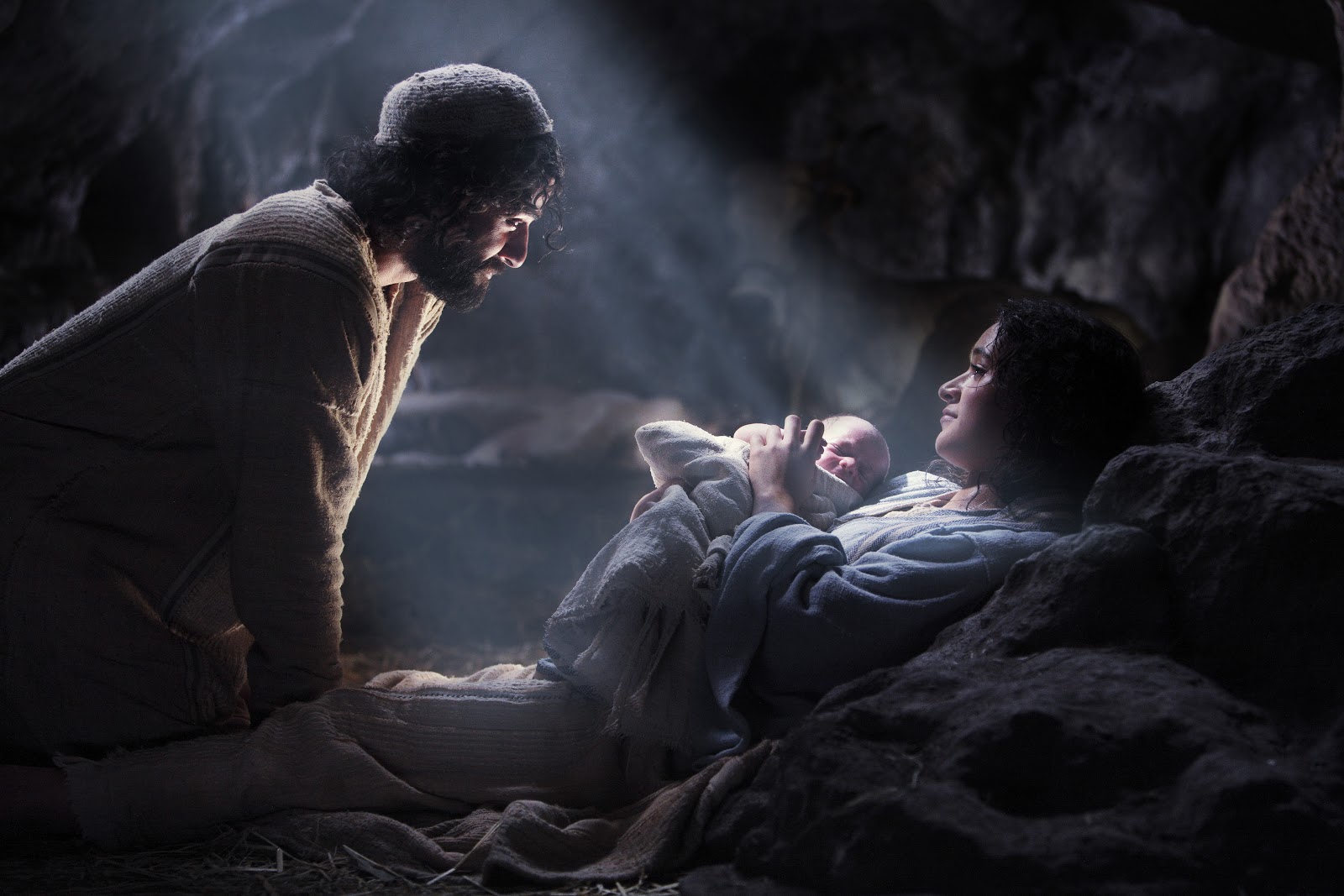
A Christmas Story


It is the custom of most churches to gather on the evening of December 24, to tell the story of the birth of Jesus, to light candles, to sing carols, and to wish one another a happy holiday. This is the favorite worship service of the year for most people. It certainly was for me, when I was a child.  I liked it because all the parts of worship I enjoyed the most were present, and the things I didn't like about church mostly didn't happen.

At my church we had two services on Christmas Eve--an early service featuring a children's program, and a midnight service featuring candles and Holy Communion. At a fairly young age I came to prefer the second service, even though in my congregation children were not permitted to partake of the elements of wafers and wine.

I think I liked it because there was a lot of singing and not much talking, and a sense of mystery and wonder that our usual Sunday morning services lacked. The people seemed subdued and yet somehow also the air crackled with excitement. As a pastor I strive always to bring that feeling to worship services. 

What do you like about Christmas Eve?

A Tale of Two Women

For as soon as I heard the sound of your greeting, the child in my womb leaped for joy. (excerpt from Luke 1: 39-56)


Although the story about a pregnant Mary visiting her relative Elizabeth only appears in Luke's gospel, it is logical to believe that John the Baptist and Jesus are related, though probably distantly. The Jewish community in Palestine at the time of Jesus' birth is probably both kind of small and insular. In any case, the story of the encounter between Mary and Elizabeth is pretty special because the Bible does not record many interactions of this nature--a  demonstration of love and care between two women. (A notable exception to this is, of course, the story of Ruth and Naomi.) 

The circumstances behind the pregnancies of these two women could not be more different. One woman, Elizabeth, is older, long married, seems to be fairly secure both financially and socially, and has longed to become a mother for many years. In contrast, Mary is very young, probably more girl than woman really, is quite poor and not yet married, and never had a chance to worry about whether or not she would be able to conceive. And yet these women feel a strong sense of mystical connection. Their faith tells them that they should regard both of these pregnancies as a blessing. Having children (particularly sons) is the most important duty of women and families regard it universally as a gift from God. In Mary and Elizabeth's day, sons mean more hands to work for the family's economic welfare, whereas nowadays children are seen as a financial burden upon their parents--a burden that can bring great joy, but nevertheless a real and challenging responsibility. 

The bottom line, then and now, is that pregnancy is more or less the same experience, whether you are very young or older, whether you have hoped to become a mom for years or motherhood happens suddenly and without warning. For a period of nine months your body is not your own, and then for a long time afterward (some would say forever) your life is not your own. Pregnancy can be a blessed state that teaches lessons about surrender, and about love. It is an experience unlike any other. But pregnancy can also be difficult. Certainly both women had moments of profound joy and moments of great anxieties during their pregnancies. Fortunately, they had each other. 

When you are in an important moment in your life, whether it is a pregnancy or a time of falling in love or a loss of a job or a serious illness, having someone there to listen and to understand can make all the difference. If you need to reach out to someone for help or comfort or an unbiased opinion, don't be afraid to reach out. 

And, even more importantly, it is good to be aware that someone may be reaching out to you for support, just as Mary reached out to Elizabeth. So many of us have lives that are so full that we can miss the signs that someone needs us. If I could encourage any type of prayer during this season, this is the type of prayer I would urge you to make--that like Mary and Elizabeth, you will be open to God's call, whatever form it takes.


Monday, December 10, 2012

Blue at Christmas?


Here at the "A Time for All" Blog I mainly like to keep things light and breezy, but I thought it would be good to tackle the important subject of Christmas Blues. While feeling "down" or depressed is tough at any time of year, it can feel especially difficult when you are expected to be making the rounds of parties and when everywhere you look, even at ads and on television shows, people are pictured looking excited and caught up in some sort of Christmas magic (brought on by being given the gift of whatever product the ad is selling, of course.)

There are lots of reasons that people are sad at Christmastime, and Christmastime sadness knows no boundaries of age, gender, income level or any other category of person. I have been there, myself, plenty of times. 


  • Maybe you have experienced a loss recently, or around this time of year. It could be a death, or other loss, such as a divorce, a move, or even becoming an "empty nester."
  • Maybe you are not feeling well physically at the moment.
  • Maybe you are unable to be with loved ones with whom you had hoped spend the holidays.
  • Maybe your financial circumstances are difficult, making your usual holiday merriment a challenge to afford.
  • Maybe work or other obligations have left you with no energy for your usual holiday traditions.
  • Understand that what you are feeling is normal and not uncommon. You are not alone, and there is nothing wrong with you. "Beating yourself up" because you don't feel happy at a time of year that is supposed to be happy will only make things worse. Give yourself a pass. 
  • Take care of your needs. If you are sick, don't overdo it. If you are sad, allow yourself to have a good cry now and again, but don't "wallow" all the time.  After you cry, dry your tears and find something cheerful to do. Listen to happy music, or call a friend and go to a movie. If your sadness has persisted for more than two weeks or is interfering with your work and usual activities, see your doctor for a physical checkup and make sure to mention that you have felt "down" or "off" recently.
  • If you are mourning someone who has died, try and include something in your holiday celebration that will help you remember the person. For example, the Christmas after my mom died, I baked her cutout cookie recipe for my family. You could do something like place framed photos of the person from Christmases past. This might make it more difficult the first time you do it but in the long run it is a good way to get past the saddest part of grieving.
  • Eat well, exercise and avoid consuming a lot of "vices" like rich food, alcohol or tobacco. Alcohol is a depressant, so if you are feeling sad, maybe it's best to avoid it all together. 
  • Don't be afraid to mix up traditions. A tradition is a shortcut to help people get into the proper frame of mind and heart. If a "tradition" doesn't work for you anymore, don't be afraid to change things up. Sometimes just a little tweak is all you need. 
  • If you aren't feeling yourself, be honest about your feelings with those close to you. There is no reason to lay a heavy burden on others, especially if they are grieving the same loss as you, but sometimes a little honesty helps people stop going through the motions and helps bring changes to the holiday season that are healing. 
  • Do something for somebody else. Sometimes what you need to feel better is to know that you are not alone. There are plenty of charities that can use help this time of year, or maybe you could reach out with a phone call, a letter or an invitation to someone else you know who could use a friend.
  • Make room for spirituality. Pray. Read scripture. Listen to inspiring music. Attend a "Blue Christmas" worship service near you.
O God of all seasons and senses, grant us the sense of your timing to submit gracefully and rejoice quietly in the turn of the seasons.
of grey and white and cold,
teach us the lessons of endings;
children growing, friends leaving, loved ones dying,
grieving over,
grudges over,
blaming over,
excuses over.
In this season of short days and long nights,
of grey and white and cold,
teach us the lessons of beginnings;
that such waitings and endings may be the starting place,
a planting of seeds which bring to birth what is ready to be born—
something right and just and different,
a new song, a deeper relationship, a fuller love—
in the fullness of your time.